Marsnut← Back to Home

PLANT SCIENCE / THE NITROGEN LAB

Nitrogen Economy

Every amino acid has a budget.

TIME LEFT90s
AMINO ACIDS0 / 12
ATP TOKENS8
REDUCING POWER8
CARBON SKELETONS6
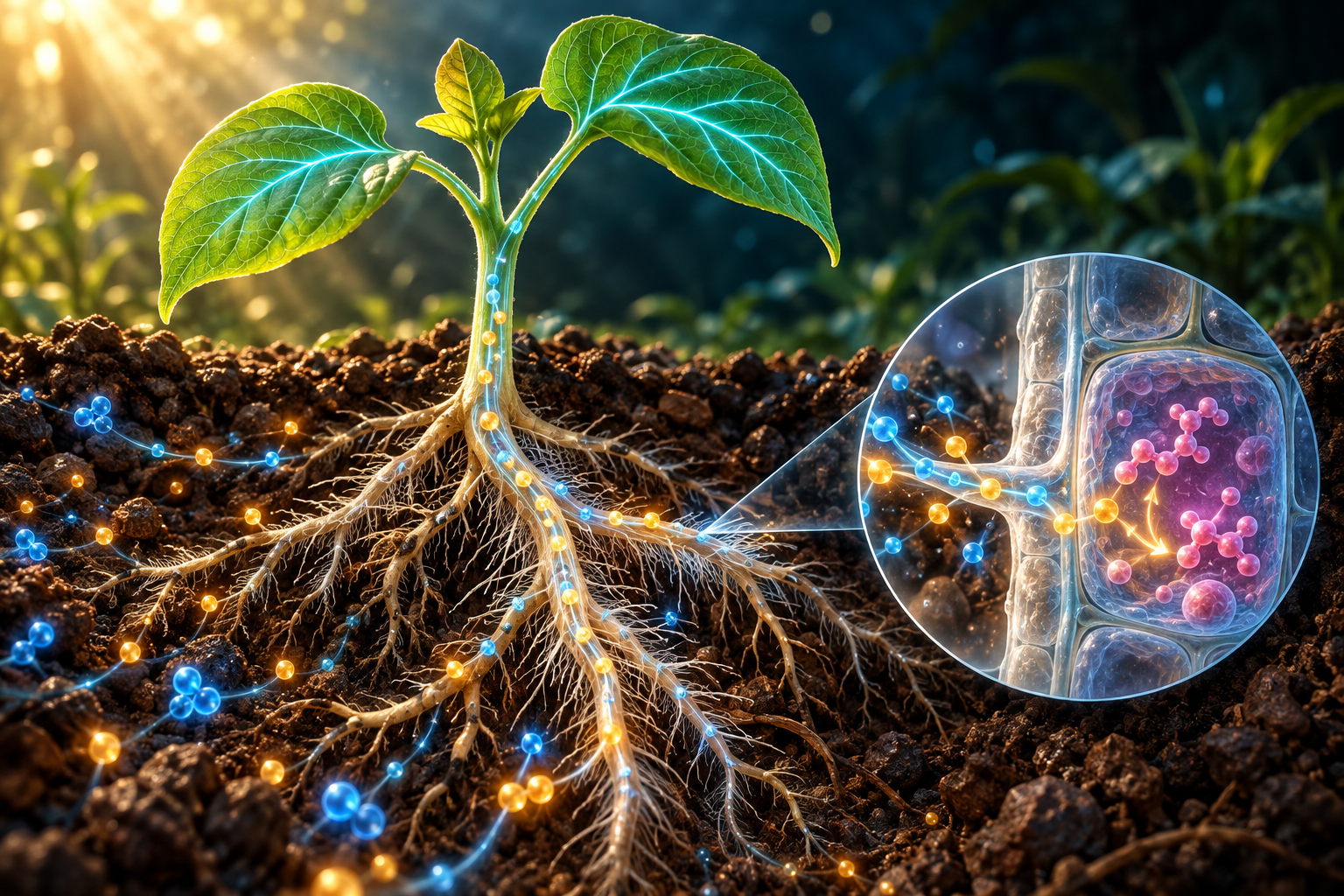
Bean seedling with detailed roots, nutrient particles and a root cell cutaway
01 / BRIGHT MORNINGEnergy supply: high
GROWTH CONTRACT

Make 12 amino-acid units.

Try both nitrogen sources. Keep the nitrogen pool moving.

Unprocessed ammonium and nitrite build pressure.
ROOT → CYTOSOL → PLASTID

The assimilation line

Soil supplyNO₃⁻ 12 · NH₄⁺ 6
NO₃⁻0
NO₂⁻0
NH₄⁺0
Glutamine0

Start a season to open the assimilation line.

Token costs, soil supplies, stress thresholds and time are game abstractions. Reducing power combines different electron donors; the GS/GOGAT cycle recycles glutamate and produces one net glutamate per ammonium assimilated.

The biology behind your budget

Nitrate is reduced to nitrite by nitrate reductase, then to ammonium by nitrite reductase. Ammonium taken up directly skips those two steps but still needs assimilation. GS uses ATP and glutamate to make glutamine. GOGAT uses glutamine, 2-oxoglutarate and reducing power to make two glutamates: one replenishes the GS cycle, leaving one net product. Other amino acids can form through further reactions, which this game omits.

The changing light supply represents a whole-plant carbon and energy budget; roots can also generate energy and reducing power from imported sugars. Compartments and transport are simplified.

Learn more: Arabidopsis root ammonium assimilation · Carbon skeletons and ammonium assimilation.

A 90-SECOND GROWING SEASON

Turn soil nitrogen into growth.

Choose your nitrogen source. Budget reducing power and carbon skeletons. Deliver 12 amino-acid units before the season ends.

  1. Take nitrate (1) or ammonium (2).
  2. For nitrate, use reductases (3, 4).
  3. Run GS (5), then GOGAT (6).
  4. Rebalance carbon and energy (7, 8).

Unprocessed nitrogen raises stress. Bright morning gives way to shade and recovery.

HOW TO PLAY

Keep carbon and nitrogen in balance.

Click or tap an action, or use number keys 1–8. Each action handles one nitrogen unit; enzymes recover briefly between actions. Use P to pause and M for sound.

Nitrate: uptake → nitrate reductase → nitrite reductase → GS → GOGAT.
Ammonium: uptake → GS → GOGAT.

ATP powers uptake and GS. Reduction and GOGAT need reducing power. GOGAT needs a carbon skeleton (2-oxoglutarate). Carbon and energy investments help recover a depleted budget.

Goal: 12 amino-acid units in 90 seconds. To earn the highest result, use both nitrogen sources and keep final stress below 50%. Stress rises when more than two ammonium or nitrite units remain unprocessed; those thresholds are illustrative.

All inventories are simplified tokens. This is a learning model, not a fertilizer recommendation.

SEASON REPORT

Back to Home