
MOLECULAR PUZZLE / GENE REGULATION
Gene Switch
A signal arrives. Which genes should respond? Combine compatible transcription factors, enhancers, repressors, and chromatin access to build a selective expression program.
2 MINUTES · POINTER / TOUCH / KEYBOARD · OFFLINE READY
Best round: —
REGULATION BENCH
2:00
NUCLEAR VIEW · REGULATORY SITESIllustration
Experiment brief
Transcription index and bands are model outputs. The display does not measure protein abundance or physiological response.
Regulation notebook
Your observations will appear here.
Biology behind the model
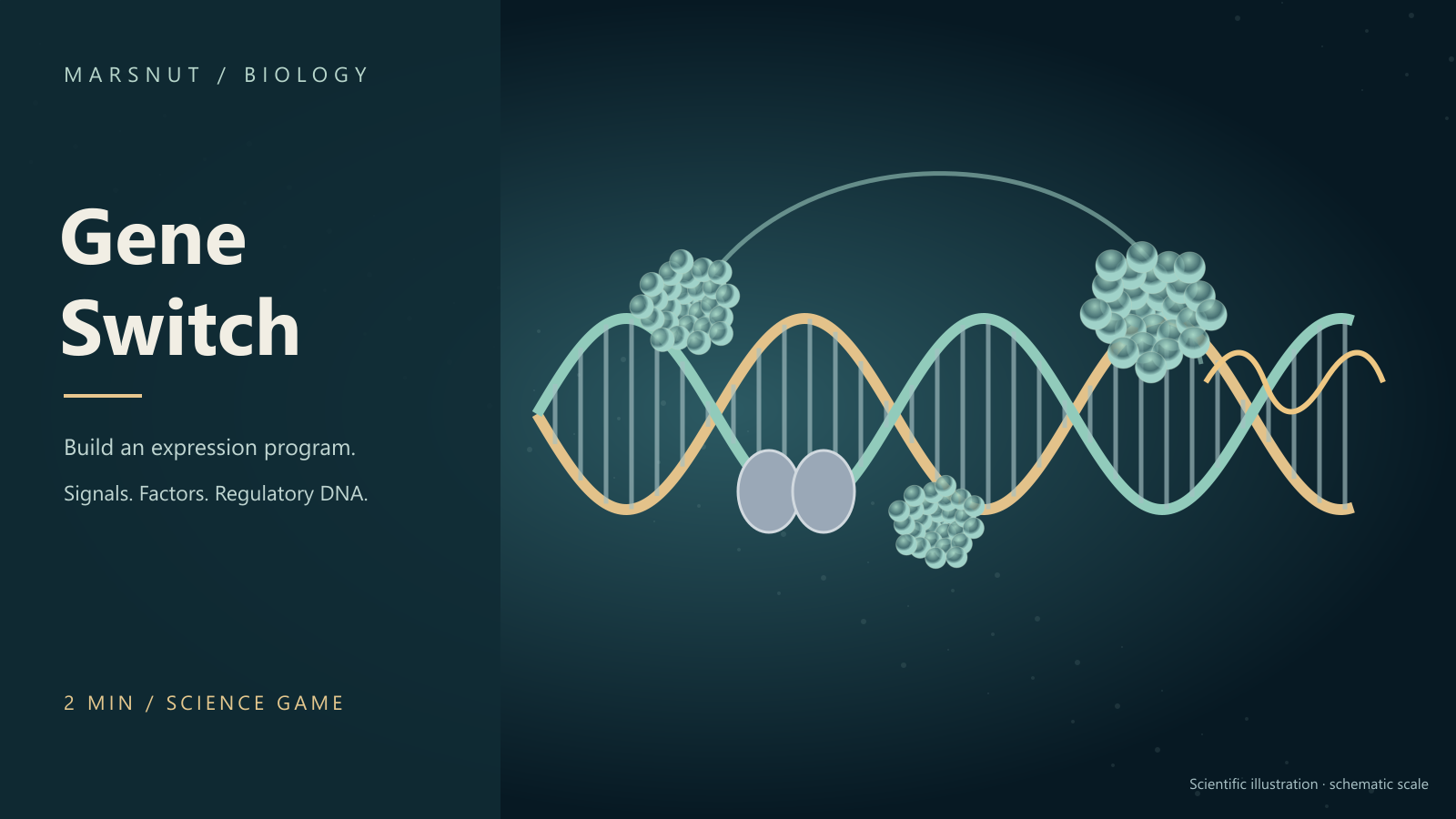
DNA regulatory sites recruit compatible proteins. Activators and repressors affect transcription, while chromatin access changes which sites can be reached. Enhancer action depends on context.
Further reading, available when online:
Regulation of Transcription in Eukaryotes
How Genetic Switches Work